Happ - Proxy Utility
- 4.4
- Rating
- 10.00M
- Installs
- Free
- Price

 Analysis by App-foxy
When I first opened Happ - Proxy Utility, I approached it as a practical Android tool rather than something I would leave running without a reason. Its purpose is straightforward: it helps users work with proxy connections, while its store summary points to an advanced security level by Xray. That makes it more relevant to people who already understand why they need a proxy than to someone looking for a one-tap privacy button.
The app is free, aimed at everyone, and developed by HappDev. It sits in the tools category, where usefulness depends less on colorful presentation and more on whether the setup is understandable and dependable. In my experience, the strongest part of this app is the way it puts a specialized connection utility into an accessible package. The weaker part is that proxy terminology can still feel intimidating when you are seeing it for the first time.
What to expect before you begin
It helps to set the right expectation immediately. This is not a general browsing app, a replacement for your regular browser, or a magic switch that automatically makes every connection private. It is a utility for handling proxy-based access, so the result depends on having a usable configuration and knowing what kind of connection you are trying to establish.
You May Also Like

 Blood Strike: 2.5 Anniversary
Blood Strike’s Loadouts Turn Every Drop Into a Tactical Gamble
A close look at Blood Strike’s custom loadouts: how fast access to signature weapons reshapes its battle royale rhythm, rewards preparation, and narrows the gap between fights.

 Pandora - Music & Podcasts
Pandora’s Music Is Easy to Start, but Harder to Recover
Pandora’s strength is its low-effort path from a seed to a station. Its weak spot is how much confidence it asks you to place in connection, setup, and quiet recovery.

 8 Ball Pool
 Is Built on Rivalries, Rematches, and Routine
A close look at the rivalries, rematches, shared routines, and unanswered safety questions that turn a quick pool match into a persistent mobile community.

 Samsung Music
’s Quiet Strength Is Playing What You Already Own
Its reach comes less from spectacle than from dependable access to a personal library. That simplicity is both the app’s strongest retention engine and its ceiling.

 AccuWeather: Weather Radar
AccuWeather Review: A Quick, Clear Forecast for Everyday Decisions
For everyday plans, the best forecast is the one you can understand quickly. AccuWeather makes rain timing, radar, and local conditions easy to act on, with a few trade-offs.

 Hill Climb Racing
Why Hill Climb Racing Still Turns Crashes Into One More Run
A tiny car, a bumpy hill and one more upgrade: Hill Climb Racing keeps resurfacing because its simple chaos makes every near-miss feel personal.
More From Our News Desk



That distinction matters because many first-time users install a proxy tool expecting the application itself to provide a complete service. Happ is better understood as the working environment for a proxy connection. If you already have connection details from a trusted source, the app can be useful. If you do not, the first challenge is not pressing the connect control; it is obtaining a configuration that is appropriate, current, and safe to use.
The Xray reference also sets this app apart from very basic proxy toggles. It suggests a more advanced technical foundation, which can be valuable for users who need flexibility. At the same time, advanced support usually means more concepts to understand. I would not choose this as my first experiment with privacy tools if I wanted everything explained in plain language from the beginning.
Happ has attracted a substantial audience, with over ten million installs and an average rating of 4.1 from around thirty-five thousand ratings. Those figures tell me that it is not an obscure experiment, but they do not remove the need to configure it carefully. A popular utility can still be the wrong fit for someone who wants a fully managed service.
The people most likely to benefit
I see three especially sensible audiences for this app. The first is someone who has received a proxy profile and needs a mobile tool capable of using it. The second is a technically curious Android user who wants more control than a simplified privacy application offers. The third is a person who regularly changes between connection profiles and prefers keeping that work inside a dedicated utility instead of editing system settings repeatedly.
There is also a useful role for Happ in troubleshooting. If a website or service behaves differently across networks, a proxy utility can help you test whether the connection path is part of the problem. That does not prove that every failure is caused by the network, but it gives you another controlled variable to examine.
I would be more cautious about recommending it to someone who cannot identify the source of a proxy configuration. A proxy provider, an employer, a school, or a knowledgeable friend may give you details that are ready to import or enter. Without that starting point, the app can feel like a dashboard without fuel.
Getting through the first setup
My advice is to prepare before opening the app. Keep the connection information in a place where you can read it accurately, and check whether it is intended for an Android proxy utility. Small errors in a server address, port, credential, or protocol choice can look like an application failure when the real problem is simply a mismatched setting.
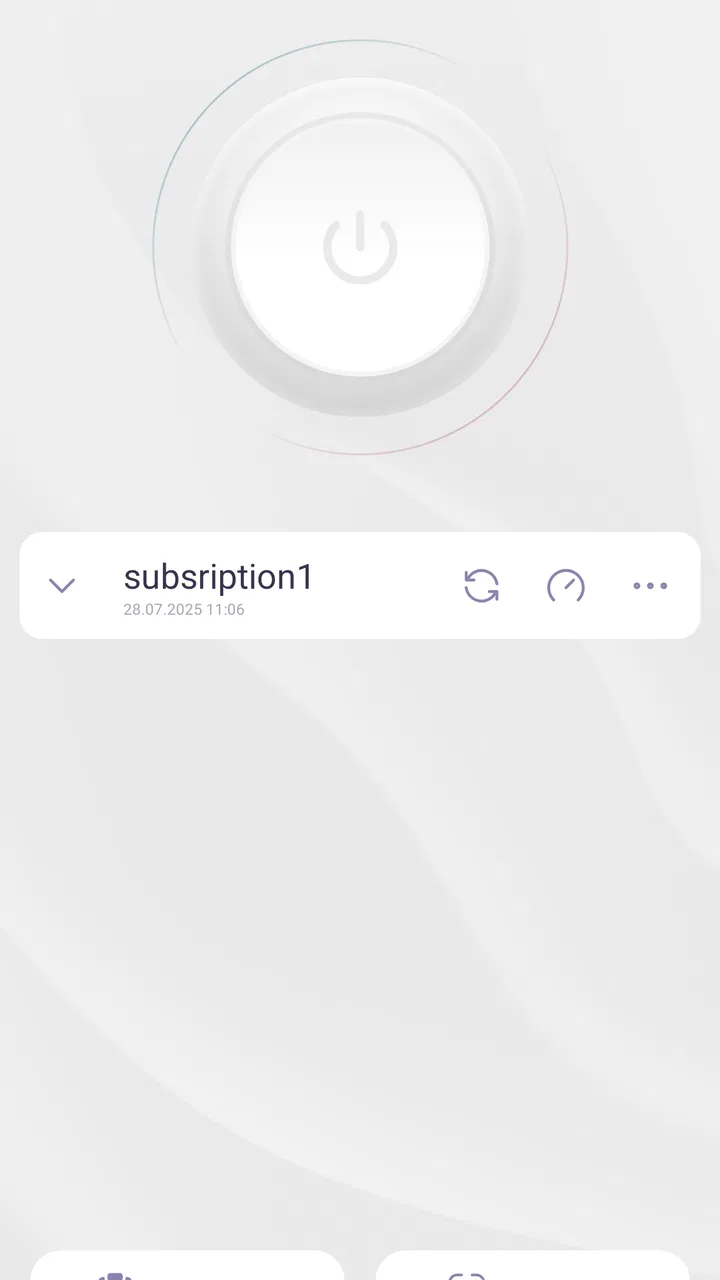
On the first launch, take a moment to identify the main areas rather than tapping every option. Look for the place where a profile or connection is added, the area where an existing profile can be selected, and the control that starts or stops the connection. This sounds basic, but it prevents a common mistake: changing advanced values before confirming that the basic profile is complete.
If your source provides an import method, use that rather than manually retyping a long configuration. Manual entry is particularly vulnerable to invisible spaces, copied punctuation, and selecting the wrong field. I find that a clean import or carefully pasted profile is normally a better starting point than trying to reconstruct a technical setup from memory.
At this stage, do not judge the app by whether it connects instantly. A proxy tool has to negotiate with an external endpoint, and the endpoint may be unavailable, overloaded, incorrectly configured, or restricted by the network you are currently using. The first setup is successful only when the profile is saved correctly and the app gives you a clear connection state.
Your first meaningful success
The best first test is a small, controlled one. Add or import one trusted profile, select it, start the connection, and then check whether the app visibly reports an active state. Avoid creating several profiles at once. If something goes wrong, a single-profile workflow makes it much easier to identify whether the issue is the profile, the network, or the app itself.
Once the connection appears active, test the exact task that made you install Happ. If you needed access to a particular service, try that service. If you wanted to compare network behavior, repeat the same simple action before and after connecting. Keeping the test consistent gives you more useful information than opening several unrelated apps and guessing what changed.
A practical everyday example would be a user working from a café who has been given a proxy profile by a trusted organization. Before starting a work session, the user can select the profile, establish the connection, and then check the service that normally requires that route. If the service works, the first goal is complete. If it does not, the next step is diagnosis, not random experimentation with advanced settings.
One habit I recommend is recording what changed between attempts. Note the selected profile, the network you were on, and whether the connection indicator changed. You do not need a complicated log. Even a short note can stop you from repeatedly testing the same failed combination and can help the person who supplied the configuration understand the problem.
Another useful habit is to stop the connection when you no longer need it, especially while learning how the app behaves. That keeps your testing deliberate and makes it easier to tell whether later browsing is using the proxy or the ordinary network path. It also prevents the common confusion of forgetting that a utility is still active and then blaming a later connection issue on another application.
Where first-time users often get confused
The biggest point of confusion is the difference between an installed app and a working proxy service. Happ provides the tool, but the quality of the connection still depends on the profile and endpoint. If the app opens normally but the connection fails, that does not automatically mean the application is broken.
A second source of confusion is the word “security.” A proxy can change how traffic is routed, but it should not be treated as a universal guarantee of anonymity or safety. The person or organization controlling the proxy may still have visibility into traffic, and a poorly sourced configuration can introduce its own risks. I would use profiles from a source I trust and avoid assuming that an advanced protocol name makes an unknown operator trustworthy.
Users may also wonder why one profile works on one network but not another. Networks can filter, block, or interfere with particular connection methods. A profile that succeeds on home Wi-Fi may fail on public Wi-Fi, or the reverse. That variation is a reason to test methodically rather than immediately changing every setting inside Happ.
Another mistake is treating every field as interchangeable. Proxy tools often expose technical choices that look similar to a beginner but have different purposes. If the profile came from a provider, copy its values exactly. If you are unsure what a field means, changing it at random is more likely to hide the original issue than solve it.
There is also a difference between a connection being established and a particular app behaving correctly afterward. Some applications use their own networking methods, cache old results, or react badly to a changed route. Test the target service directly, and if only one app fails while ordinary browsing works, investigate the target app separately instead of assuming that Happ has failed.
How the advanced angle affects daily use
The Xray-oriented positioning is the reason I would place Happ above a very basic proxy switch for users who need more control. It is aimed at a more capable level of connection handling, which can make it useful in situations where a simple manual proxy field is too limited. The trade-off is that the app rewards preparation and understanding rather than casual tapping.
For routine use, I would keep the profile list tidy. Give each saved connection a name that describes its purpose or source, not just a vague label such as “new” or “test.” This is a small workflow improvement, but it becomes important as soon as you have more than one profile. Clear names reduce the chance of activating the wrong route in a hurry.
I would also separate testing from normal use. Keep one profile that you know has worked and experiment with new configurations separately. That way, a failed test does not replace the only connection you rely on. This is one of the more valuable trade-offs of an advanced utility: flexibility is useful, but it creates more opportunities for user error.
When troubleshooting, change one thing at a time. First verify the profile, then the network, then the target service. Avoid editing several advanced values together because you will lose the ability to tell which change mattered. Happ is most manageable when you treat it like a technical instrument rather than a collection of switches.
What the current app details mean in practice
The current release is version 3.21.1, and the app supports Android 5.0 and later. That broad compatibility makes it approachable for people using older Android hardware, not only recent phones. Still, compatibility with the operating system does not guarantee identical behavior on every device, since manufacturers can handle background activity and network controls differently.
The app is free, which lowers the barrier to trying it with a legitimate profile. I appreciate that because proxy utilities are difficult to evaluate before you know whether their workflow fits you. The free price does not change the need to evaluate the source of your configuration, though. A no-cost app and a trustworthy proxy service are separate questions.
Its everyone age rating also makes the application broadly accessible. That should be read as an audience classification, not as a promise that every configuration or destination is suitable for every person. Parents, schools, and workplaces may still have their own rules about proxy use, and those rules matter more than the app’s general age label.
HappDev has built something that is clearly intended to serve a wide Android audience while retaining an advanced technical direction. I think that combination explains both its appeal and its learning curve. A beginner can install it, but a beginner may still need help understanding the connection details that make the tool useful.
When another option may be better
I would choose a simpler privacy application instead if my main goal were an easy, guided experience with minimal configuration. Someone who wants to press one button, choose a location, and receive clear explanations may find Happ too hands-on. Its value increases when you have a specific proxy workflow, not when you simply want a generic privacy product.
I would also consider a provider’s own application when the provider supplies one and offers direct support for it. A dedicated client may explain its profiles more clearly and make account-related troubleshooting easier. Happ is more appealing when you want a general utility that can work with the configuration you already have, rather than a service tied to one provider.
On the other hand, I would prefer Happ over repeatedly editing Android’s ordinary proxy settings when I need a dedicated place to manage proxy work. System settings are fine for a simple, stable arrangement, but they are less comfortable for users who need to compare profiles or keep connection testing separate from the rest of the phone.
The app is not the right choice for someone who expects it to find reliable proxy servers automatically, explain every networking concept, or guarantee that all applications will follow the same route. Those expectations point toward a different type of product. Happ makes more sense when you accept that setup and verification are part of the job.
My recommended path after the first connection
After you achieve one successful connection, resist the temptation to change everything immediately. Use the working profile for the task you originally cared about, then disconnect and confirm that your normal connection behaves as expected. This simple before-and-after check gives you a clearer understanding of what Happ is doing on your device.
Next, create a personal routine: verify the selected profile, connect, test the intended service, and disconnect when finished. If a connection fails later, return to that routine and compare the current situation with the last known successful one. This is more reliable than relying on a vague memory that “it worked before.”
Keep your expectations realistic about speed and stability. Routing traffic through a proxy can change responsiveness, and the endpoint’s condition matters. If a task becomes noticeably slower, decide whether the proxy is still necessary for that task. The most useful configuration is not always the one with the most advanced options; it is the one that solves the actual problem without adding needless friction.
Finally, treat profiles as sensitive connection material. Do not share them casually, and do not install configurations from unknown sources just to see whether they work. The technical flexibility that makes Happ useful also means the user has more responsibility for what gets added to the app.
My verdict for a first-time user
After working through the app’s intended workflow, I see Happ as a capable proxy utility for Android users who want control and already have a legitimate reason to use a proxy. Its Xray-focused direction gives it a more advanced identity than a basic system setting, while its free availability and broad Android support make it easy to try.
My recommendation comes with one clear condition: start with one trusted profile and one simple goal. Do not judge the app by experimenting with unknown configurations, and do not confuse a successful connection with a complete privacy guarantee. Once that distinction is clear, the path from installation to useful daily operation becomes much less stressful.
For me, the app’s best quality is that it can turn a technical proxy task into a repeatable phone workflow without forcing me into one provider’s ecosystem. Its main weakness is the same thing that gives it power: first-time users must understand enough about their configuration to use it responsibly. If that level of involvement sounds acceptable, Happ is worth trying. If you want a fully managed, explanation-heavy privacy service, I would look elsewhere.
FAQs for Happ - Proxy Utility
01What is Happ - Proxy Utility and what does it do?
Happ - Proxy Utility is an app designed to enhance your internet privacy and security by routing your online traffic through a secure proxy server. This helps in masking your IP address, allowing you to browse anonymously and access region-restricted content. It’s particularly useful for protecting sensitive data when using public Wi-Fi networks.
02Is Happ - Proxy Utility free to use, or does it require a subscription?
Happ - Proxy Utility offers both free and subscription-based plans. The free version provides basic proxy services with limited bandwidth, while the premium subscription unlocks advanced features such as faster speeds, multiple server locations, and enhanced security protocols. Users can choose a plan based on their browsing needs and budget.
03How does Happ - Proxy Utility ensure my online security and privacy?
Happ - Proxy Utility secures your online activities by encrypting your internet connection, thereby preventing hackers and malicious entities from intercepting your data. It employs strong encryption protocols and regularly updates its security features to maintain the highest standards of privacy. This ensures that your personal information remains confidential while surfing the web.
04Can Happ - Proxy Utility be used on both Android and iOS devices?
Yes, Happ - Proxy Utility is compatible with both Android and iOS devices. The app is designed to work seamlessly across various mobile platforms, providing a consistent and reliable proxy service. Users can download it from the Google Play Store for Android devices and the App Store for iOS devices, ensuring broad accessibility.
05What are the potential drawbacks of using Happ - Proxy Utility?
While Happ - Proxy Utility offers robust security features, some users may experience slower internet speeds due to encryption overheads. Additionally, the free version has limited server locations and bandwidth, which might not meet the needs of heavy internet users. It’s recommended to evaluate your browsing requirements to determine if the premium version is necessary.
Pros
- Easy setup process for beginners.
- Supports multiple proxy protocols.
- Fast and reliable connection speeds.
- User-friendly interface design.
- Comprehensive customer support available.
Cons
- Limited free version features.
- Occasional ads can be intrusive.
- May drain battery quickly.
- Some servers can be slow.
- Subscription required for premium features.

Happ - Proxy Utility
Gallery